
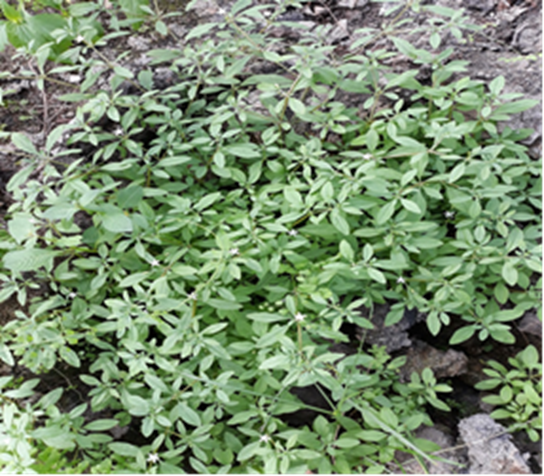
Bitter knotweed (Polygonum aviculare L.) grows abundantly in sugarcane-growing areas of the former Phung Hiep District. Local residents traditionally harvest the plant and sell it fresh at local markets. Under natural conditions, the plant grows vigorously from approximately February to May each year in sugarcane fields. It is well adapted to the environmental conditions of Phung Hiep and possesses significant medicinal value.
According to traditional Eastern medicine, bitter knotweed contains essential oils, avicularin, quercetin, emodin, flavonoid pigments, avicularoside, kaempferitroside, tannins, and silicic acid. Indian literature reports that the plant contains 3–4% tannins, mucilage, gallic acid, caffeic acid, oxalic acid, silicic acid, chlorogenic acid, and coumaric acid. In addition, it contains d-catechol, leucoanthocyanidin, and oxymethyl anthraquinone (0.35% in roots, 0.20% in stems, and 0.15% in leaves).
Bitter knotweed is rich in phenolic compounds. The total phenolic content in leaves and flowers is reported at 31.25 ± 1.56 mg/g and 25.41 ± 1.07 mg/g, respectively. These phenolic compounds exhibit antioxidant properties that help protect cells from oxidative damage.
Production Process of Bitter Knotweed Tea Bags
Bitter knotweed tea bags contain numerous medicinally and nutritionally valuable compounds beneficial to human health. They are convenient to use and well suited to modern lifestyles.
a. Raw Material Selection and Preparation
Raw Material Selection
The raw material (bitter knotweed) is harvested from farmers’ fields. The plants are collected during spring when they reach appropriate maturity (approximately 9–10 weeks after planting or natural emergence in sugarcane beds). Harvesting is conducted on dry, sunny days, preferably in the early morning or late afternoon.
Removal of Impurities and Washing
Freshly harvested materials may contain impurities such as debris, weeds, straw, and other contaminants. These impurities must be removed to ensure the quality of the raw material used for processing. After sorting, the material is thoroughly washed under running water to remove dust, soil, sand, and other contaminants from the surface of leaves, stems, and roots. Washing also helps reduce the microbial load present on the plant surface.
b. Withering
The harvested material is first drained before the withering process. Withering creates suitable physical and mechanical properties for the subsequent rolling stage. More importantly, it establishes favorable biochemical conditions for fermentation by enhancing enzyme activity, promoting the formation of soluble compounds, and initiating beneficial chemical transformations that contribute to the final tea quality.
The material is spread evenly on clean trays at a thickness of 8–10 cm and withered under sunlight for 1–2 hours. After withering, the material proceeds to the rolling stage to initiate fermentation.
A Dome solar drying system may also be utilized. The structure is covered with UV-resistant polycarbonate roofing, which prevents direct ultraviolet exposure and helps maintain the natural color of the bitter knotweed during drying. Furthermore, the roofing material minimizes heat loss by reflecting infrared radiation back into the drying chamber, thereby significantly improving thermal efficiency.
The roofing sheets exhibit a short-wave radiation transmittance of 0.8 and an infrared transmittance of 0.2, enhancing the greenhouse effect within the drying facility. Due to the relatively low thermal conductivity of polycarbonate, heat loss through conduction is minimized. Temperatures inside the dryer typically range from 60–82°C under sunny conditions and can be maintained at 35–40°C during rainy weather. This enables rapid drying, prevents mold growth, reduces dependence on weather conditions, and ensures food safety by protecting the product from dust and insects.
c. Rolling
During rolling, the temperature of the material increases due to frictional forces and heat generated by biochemical fermentation reactions. Rolling disrupts plant cells, allowing cell sap to be released and facilitating contact between enzymes and their substrates in the presence of oxygen, thereby promoting oxidation and fermentation. This process also improves the extraction of soluble compounds during tea brewing.
Rolling is performed manually, and the duration depends on the quantity of raw material being processed.
d. Fermentation
Fermentation is a critical stage in tea processing. It involves the extensive oxidation of certain components within the raw material, catalyzed by oxidoreductase enzymes in the presence of atmospheric oxygen. Besides contributing to the attractive color of the tea infusion, fermentation also helps develop desirable aromatic compounds.
After rolling, the material is loosened and spread evenly on a clean surface at a thickness of 3–4 cm. Fermentation is carried out for approximately 3 hours.
e. Drying
The fermented material is placed on trays inside a drying cabinet and dried at 103°C for 3 hours. During drying, elevated temperatures deactivate enzymes, stabilize compounds formed during fermentation, and reduce moisture content to a safe level for storage. This ensures product quality and shelf-life stability.
After drying, the material is ground into smaller particles using a blender.
f. Blending, Packaging, and Finished Product
The dried and ground bitter knotweed is blended with sweet herb (Stevia rebaudiana) as a natural flavoring agent. The blending ratio of bitter knotweed to stevia is 1:0.25.
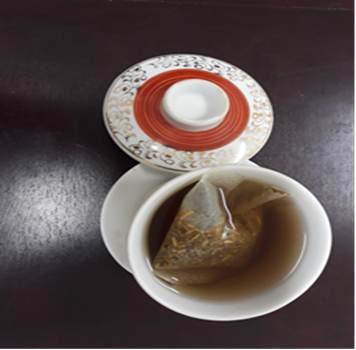
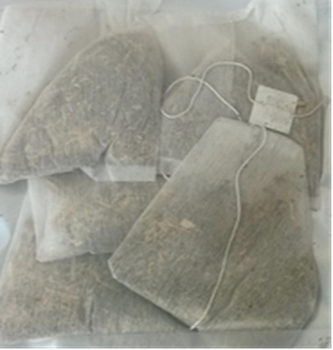
Following blending, the mixture is packaged into tea bags to obtain the final product.
Processing Flow Chart for Bitter Knotweed Tea Bags

The final tea bag product consists primarily of bitter knotweed and stevia. The tea bags are packaged and stored under appropriate conditions. The product has a shelf life of 12 months.
Ngày đăng: 10-06-2026
Tác giả: Trung tâm ứng dụng