
Vietnam currently has the largest dragon fruit cultivation area and production volume in Asia and is also one of the world's leading exporters of dragon fruit. Dragon fruit is widely cultivated throughout the country, including both white-fleshed and red-fleshed varieties. In 2018, the total cultivation area reached 55,419 hectares, with a total production of 1,074,241 tons. The three provinces with the largest cultivation areas and production volumes were Bình Thuận, Long An, and Tiền Giang. Bình Thuận accounted for 55.11% of the national production, followed by Long An (24.51%) and Tiền Giang (15.04%) (Phan, 2019).
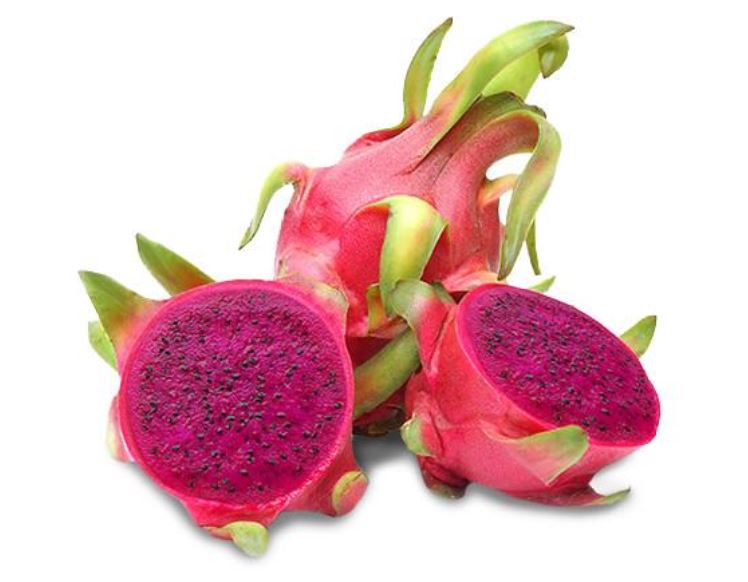
Red-fleshed dragon fruit (Hylocereus polyrhizus) is now widely cultivated throughout the Mekong Delta and has generated significant economic benefits for local farmers. The fruit contains numerous valuable nutrients, including proteins, carbohydrates, organic acids, minerals (iron, magnesium, calcium), vitamin A, vitamin C, and other beneficial compounds. In addition, red-fleshed dragon fruit contains lycopene, a natural antioxidant known for its potential anti-cancer properties, cardiovascular health benefits, and blood pressure reduction effects.
Betacyanin is the natural pigment responsible for the distinctive red-purple color of red-fleshed dragon fruit. This compound has been extensively studied for its health-related properties, particularly its strong antioxidant activity.
Food colorants are important food additives that enhance the visual appeal and overall sensory quality of products. Following concerns regarding the adverse health effects associated with certain synthetic colorants, consumers have become increasingly selective about food products. Consequently, the use of natural colorants has emerged as a sustainable development trend. However, valuable natural sources of pigments have not yet been fully explored and commercialized. Therefore, research on the extraction and application of natural pigments derived from red dragon fruit peel is both necessary and highly practical.
This study aims to develop a new value-added product with nutritional benefits while meeting food safety and hygiene standards to protect consumer health. At the same time, it seeks to utilize the abundant by-products generated by red-fleshed dragon fruit processing facilities, thereby creating additional economic value and addressing raw material utilization challenges.
The processing procedure is relatively simple and easy to implement, making it suitable for both household-scale production and small manufacturing facilities. The process does not require significant investment.
Research findings indicate that red dragon fruit peel is a promising source for betacyanin extraction. To obtain an extract with high betacyanin content and viscosity, optimal extraction conditions were determined as follows: a solvent-to-material ratio of 70% ethanol at 14.06:1 (v/w), extraction temperature of 56.51°C, and extraction time of 29.48 minutes.
Furthermore, the use of antioxidants such as ascorbic acid to reduce the pH of the pigment solution is necessary to minimize color degradation and preserve betacyanin content. In addition, light-protective packaging helps slow down the degradation of betacyanin and maintain the viscosity of the color solution.
After extraction, the obtained solution is concentrated through rotary evaporation to increase betacyanin concentration. The freeze-drying process was conducted using 20% maltodextrin as the selected carrier concentration. The resulting betacyanin powder is expected to be further studied for applications in cosmetics, including lip balms, skincare products, and related formulations.
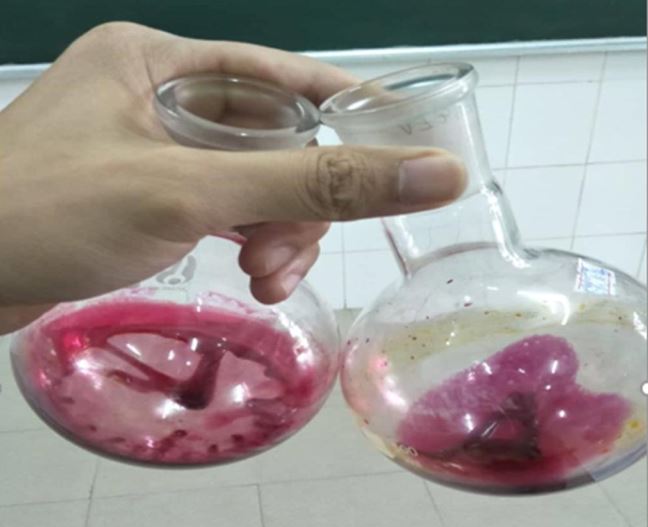
The resulting betacyanin powder contained a total polyphenol content of 87.10 mg GAE/100 g dry matter and demonstrated DPPH free radical scavenging activity of 19.62 mg/mL.
The betacyanin powder shows strong potential for application as a natural, bio-based food colorant.
The development of a production process for betacyanin powder has significant practical value. It contributes to reducing post-harvest losses and spoilage during peak harvest seasons while helping address product shortages during off-season periods. Currently, products made from red-fleshed dragon fruit remain relatively limited, with most fruits consumed fresh. A large proportion of production is exported to China, where market prices can be highly unstable. During peak harvest seasons, production volumes are often abundant while selling prices remain low.
The extraction of betacyanin from red-fleshed dragon fruit yielded promising results throughout the study. Thanks to its low cost, abundant availability, long storage potential, and simple, cost-effective processing method, red-fleshed dragon fruit represents an ideal and innovative raw material for betacyanin production.
This research is expected to open new opportunities in the cosmetics industry by providing natural, environmentally friendly ingredients that are safe for consumers while supporting the sustainable utilization of agricultural resources.
Ngày đăng: 02-04-2026
Tác giả: Trung tâm ứng dụng