
Phalaenopsis orchids (Phalaenopsis spp.) are among the most economically valuable ornamental orchid species and are widely favored for decoration and the commercial flower industry. However, traditional propagation methods such as offshoot division or seed sowing often result in low multiplication rates, extended growth periods, and difficulties in maintaining uniform plant quality. Therefore, the application of plant tissue culture technology for Phalaenopsis propagation has become an essential approach to producing disease-free, uniform planting materials capable of meeting large-scale production demands.
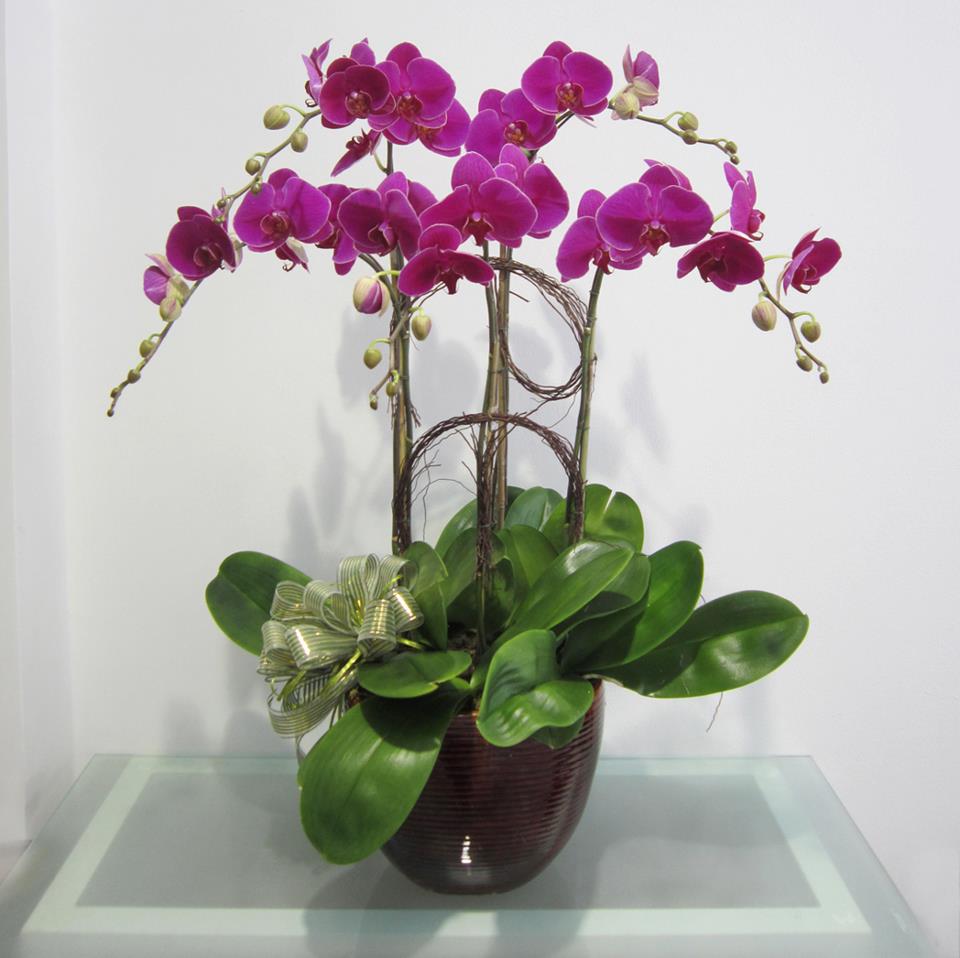
The tissue culture propagation process for Phalaenopsis orchids is based on the utilization of dormant buds located on flower spikes, combined with appropriate nutrient media and culture conditions to stimulate regeneration and the development of complete plantlets. This method enables rapid multiplication within a relatively short period, minimizes genetic variation, and improves survival rates during acclimatization and nursery production.
The first stage of the process involves explant sterilization to obtain clean plant materials for in vitro culture. Flower spikes are selected from healthy, disease-free mother plants and cut into segments approximately 5–6 cm long, each containing a dormant bud. The explants are initially washed with a diluted soap solution to remove dirt and contaminants, followed by surface sterilization using 70% ethanol and diluted sodium hypochlorite (Javel) solution supplemented with Tween 20. After several rinses with sterile distilled water, damaged tissues are removed, and the explants are cultured on a basal Murashige and Skoog (MS) medium supplemented with sucrose and agar. This stage ensures that the cultured materials remain free from microbial contamination and provides a foundation for subsequent regeneration processes.
The next stage involves the direct induction of protocorm-like bodies (PLBs) from flower spike nodes. Nodes with high regenerative potential are selected, treated to prevent tissue browning, and cultured on MS medium supplemented with benzyladenine (BA) at an appropriate concentration. Cultures are maintained in a growth room at a stable temperature of approximately 27°C, under diffused light conditions and suitable humidity levels. After approximately two to three months, PLBs become clearly visible and serve as the primary source material for rapid multiplication.
During the PLB multiplication stage, the protocorm-like bodies are transferred to MS medium containing a lower concentration of BA to stimulate shoot differentiation. Culture conditions, including temperature, light intensity, and humidity, are carefully maintained to ensure uniform growth. After approximately three months of cultivation, distinct Phalaenopsis shoots develop, exhibiting healthy green coloration, characteristic morphology, and suitable size for the rooting and growth stage.
The in vitro plant growth stage begins when shoots reach a height of approximately 2–2.5 cm. The shoots are transferred to a more nutrient-rich medium containing Hyponex mineral fertilizer supplemented with natural additives such as coconut water, ripe banana, and potato extract. These supplements provide additional vitamins, minerals, and natural growth-promoting substances. Activated charcoal is incorporated into the medium to adsorb inhibitory compounds and stabilize the culture environment. Under optimal conditions, the orchid plantlets develop complete shoots, leaves, and root systems, achieving vigorous and stable growth.
When the plantlets reach an average height of 4–5 cm and possess three to four leaves and three to four healthy roots, they are considered morphologically complete. The plantlets are then separated from clusters and transferred to the acclimatization stage before being moved to the nursery. Acclimatization is achieved by gradually reducing humidity, increasing light exposure, and adjusting temperature conditions to help the plantlets adapt to the external environment. This stage is critical, as it largely determines the survival rate of the plants after transplantation into natural growing substrates.
The final product of this process is a uniform population of tissue-cultured Phalaenopsis seedlings that are disease-free, vigorous, and highly adaptable to nursery and commercial production conditions. The application of tissue culture technology for Phalaenopsis propagation contributes significantly to securing a stable supply of high-quality planting materials, reducing production costs, improving economic efficiency, and promoting the development of Vietnam’s high-tech orchid industry.
Ngày đăng: 12-04-2026
Tác giả: Trung tâm ứng dụng