
Dragon fruit in general, and red-fleshed dragon fruit (Hylocereus polyrhizus) in particular, contains a high water content, is rich in dietary fiber, and provides numerous nutrients, including vitamins, minerals, and antioxidant compounds, especially flavonoids, polyphenols, and betalains (Perween et al., 2018). As a result, dragon fruit offers various health benefits, such as supporting weight management, improving digestion, reducing blood cholesterol levels, helping prevent cancer, and enhancing the immune system (Verma et al., 2017).
In addition, dragon fruit cultivation requires relatively low agricultural inputs. The plant is tolerant to drought and salinity and can adapt well to high light intensity and elevated temperatures (Nie et al., 2015). Therefore, despite being a tropical fruit, dragon fruit is now cultivated extensively in more than 20 tropical and subtropical regions around the world (Mercado-Silva, 2018).
In Vietnam, both white-fleshed and red-fleshed dragon fruit are grown throughout the country. In 2018, the total cultivation area reached 55,419 hectares, with a total production of 1,074,241 tons. The three provinces with the largest cultivation areas and production volumes were Binh Thuan, Long An, and Tien Giang. Binh Thuan accounted for 55.11% of the national production, followed by Long An (24.51%) and Tien Giang (15.04%) (Phan, 2019).
Currently, advances in breeding and cultivation techniques have enabled year-round fruit production. However, the continuous expansion of cultivation areas has resulted in oversupply, causing market prices to decline and leading to substantial quantities of unsold fruit that may eventually spoil. Various solutions have been proposed to utilize surplus dragon fruit, including the production of dried dragon fruit, jam, ice cream, and dragon fruit bread.
Furthermore, both domestic and international studies have reported the development of value-added products from red-fleshed dragon fruit, such as lactic acid-fermented dragon fruit beverages (Ong et al., 2012), dragon fruit gummy candies (Hani et al., 2014), fresh dragon fruit juice (Zhu et al., 2021), and dragon fruit wine (Thao et al., 2019; Binh & Diep, 2020).
Dragon Fruit Cider as a Value-Added Product
Cider is a low-alcohol beverage produced through the fermentation of fruit juice. In Vietnam, several studies have investigated cider production from various fruits, including wild apple (Docynia indica) (Hanh et al., 2016), mulberry (Tu, 2019), and acerola cherry (Mai, 2020). White-fleshed dragon fruit cider has also been studied (Mi & Tien, 2021), creating a foundation for exploring cider production from red-fleshed dragon fruit.
A particularly attractive characteristic of red-fleshed dragon fruit is its high content of betacyanin pigments, which provide a vibrant red-purple color and possess strong antioxidant properties (Choo et al., 2019; Le & Le, 2021; Khoo et al., 2022). These characteristics make it an ideal raw material for developing functional beverages with enhanced nutritional and biological value.
Moreover, fruit ciders generally contain a relatively low alcohol content, making them suitable for a broad range of consumers. Fermented fruit beverages have also been reported to stimulate digestive activity and help reduce cardiovascular disease risk (Horácková et al., 2018; Lorenzini et al., 2019; Zhang et al., 2021).
Therefore, this study was conducted to utilize the abundant supply and attractive color of red-fleshed dragon fruit, diversify dragon fruit-based products, and enhance the economic value of this important fruit crop.
Fermentation Process for Red-Fleshed Dragon Fruit Cider

The study aimed to establish an optimized fermentation process by evaluating key factors affecting cider production, including:
- Dilution ratios (fruit pulp to water): 1:1, 1:2, and 1:3 (w/v)
- Fermentation time: 2, 3, 4, and 5 days
- Soluble solids content: 14–22 °Brix
- pH values: 3.8–5.0
- Yeast concentration (Saccharomyces cerevisiae BV818): 0.02–0.10% (w/v)
The results demonstrated that pretreatment with pectinase enzyme at a concentration of 0.2% (w/v) provided the most effective juice extraction.
Optimal fermentation conditions were identified as follows:
- Fruit-to-water ratio: 1:2 (w/v)
- Initial soluble solids: 18.5 °Brix
- pH: 4.16
- Yeast concentration: 0.07% (w/v)
- Fermentation period: 5 days
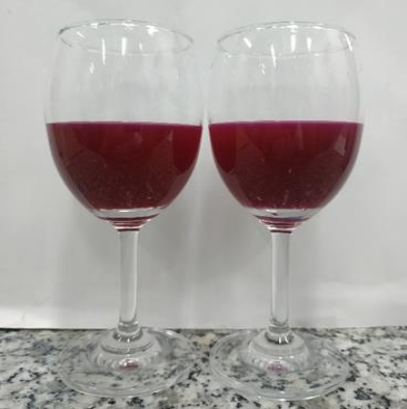
Under these conditions, the resulting red-fleshed dragon fruit cider achieved an ethanol content of 4.79% (v/v).
Product Potential and Significance
Red-fleshed dragon fruit cider is produced entirely through the natural extraction and fermentation of dragon fruit juice. The product contains no preservatives or artificial additives, ensuring a clean-label beverage with natural ingredients.
Red-fleshed dragon fruit is highly appreciated for its pleasant flavor, attractive appearance, and rich nutritional composition. Therefore, the development of innovative products such as dragon fruit cider is essential for increasing the added value of dragon fruit production.
Beyond creating a novel beverage, this product contributes to reducing post-harvest losses, expanding market opportunities, diversifying processed fruit products, and ultimately improving farmers' incomes. The successful development of red-fleshed dragon fruit cider also demonstrates a promising approach to enhancing the sustainability and economic efficiency of dragon fruit cultivation in Vietnam.
Ngày đăng: 24-05-2026
Tác giả: Trung tâm ứng dụng