
In the context of the implementation of Vietnam’s National Green Growth Strategy and Decision No. 876/QĐ-TTg issued by the Prime Minister on green energy transition, the development of charging infrastructure for electric vehicles has become an urgent requirement in terms of technology advancement and urban planning.
As a science and technology organization serving as a bridge to promote the application of technological innovations into practice, the Can Tho Center for Application of Science and Technology Advances (CASTA) has partnered with EVG Group Joint Stock Company to pilot the operation of an electric vehicle charging station.
Deployment of Technical Infrastructure at CASTA Headquarters
The pilot charging station system has been installed and put into operation at:
No. 166 Nguyen Van Cu Street, An Binh Ward, Can Tho City
(Headquarters of the Can Tho Center for Application of Science and Technology Advances)
This project is not merely the installation of charging equipment; it also serves as a research and demonstration model aimed at evaluating the feasibility and effectiveness of applying green technologies to urban transportation infrastructure.
Technical Specifications and Charging Technology
The pilot system utilizes the EVG DC 60kW fast charger, representing a modern generation of rapid-charging technology designed for safe operation and high efficiency. Key technological features include:
- Power Output and Efficiency: The charging station delivers a maximum output power of 60kW and is equipped with a dual-gun design, enabling simultaneous charging of multiple electric vehicles.
- Wide Voltage Range: The equipment supports an input voltage of AC380V±15% and provides a DC output voltage ranging from 200V to 1000V, making it compatible with most electric vehicle battery systems currently available on the market.
- Smart Connectivity (IoT): The charging station is integrated with 4G, Wi-Fi, and Ethernet connectivity standards and supports modern authentication methods through QR code scanning or RFID cards.
- Standardized Communication Protocol: The system operates on the OCPP 1.6J (Open Charge Point Protocol) standard, ensuring interoperability, centralized charging data management, and compatibility with smart charging network systems—an essential requirement for modern charging infrastructure management.
Scientific and Environmental Objectives
This pilot cooperation aims to promote sustainable transportation while reducing carbon dioxide (CO₂) and methane (CH₄) emissions from the transportation sector.
Through the collection and analysis of operational data and performance reports, the Can Tho Center for Application of Science and Technology Advances and its partner will gain practical insights to evaluate and refine technological processes. The results will serve as a foundation for proposing solutions to replicate environmentally friendly and sustainable green transportation models in the future.
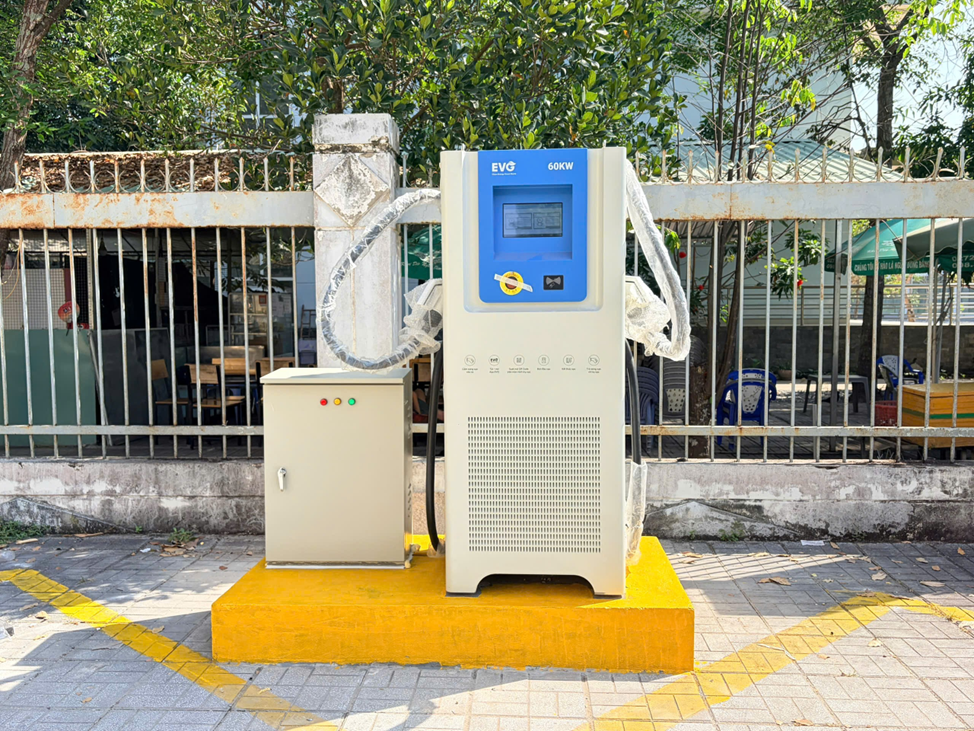
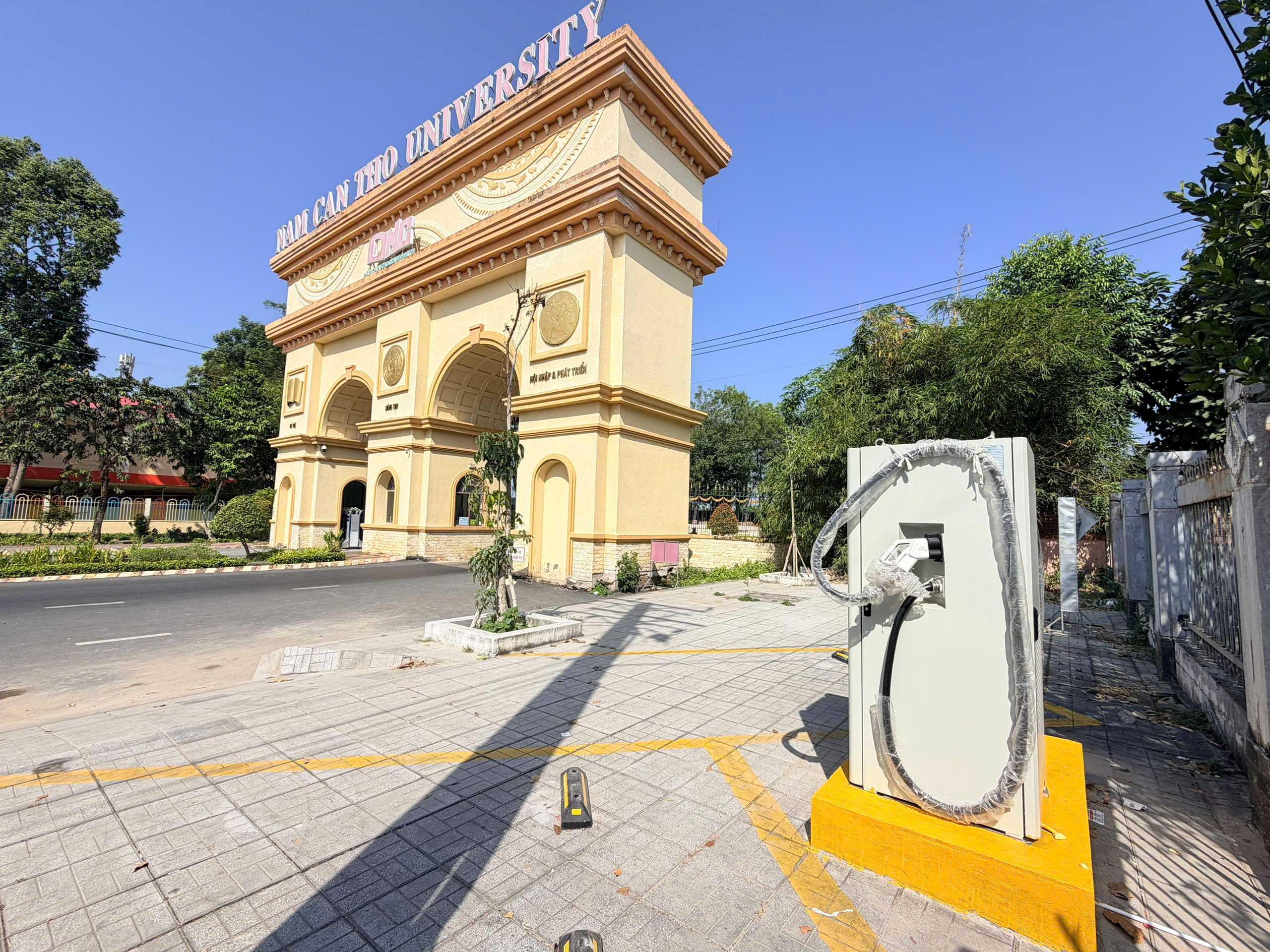
The EVG electric vehicle charging station has been installed through the cooperation project at the headquarters of the Can Tho Center for Application of Science and Technology Advances.
Ngày đăng: 09-04-2026
Tác giả: Trung tâm ứng dụng