
The Multifaceted Benefits of Biofuels
At the seminar titled “E10 Gasoline and the Need to Accelerate the Roadmap for Transitioning from Conventional Gasoline”, organized by Industry and Trade Newspaper, experts, policymakers, and business representatives discussed the role of biofuels in the current development context.
According to Mr. Dao Duy Anh, the policy of developing biofuels and building a green economy has been a strategic direction of the Communist Party and the Government since the early 2010s. Practical implementation over recent years has demonstrated that promoting the use of bio-gasoline delivers numerous tangible benefits.

Environmental Benefits
First and foremost are the environmental advantages. Blending ethanol into gasoline significantly reduces greenhouse gas emissions. Scientific studies estimate that burning one liter of conventional gasoline releases approximately 2.3–2.5 kilograms of CO₂ into the atmosphere.
Therefore, replacing 5–10% of conventional gasoline with biofuel ethanol (E100)—through the use of E5 and E10 gasoline—could substantially reduce emissions. With Vietnam’s annual gasoline consumption averaging around 12 million cubic meters, CO₂ emissions could be reduced by approximately 2.5 million tons per year. This represents a significant contribution toward Vietnam’s commitment to achieving net-zero emissions.
Economic and Social Development Opportunities
Beyond environmental benefits, biofuels offer substantial opportunities for socio-economic development. Expanding biofuel production creates demand for feedstock cultivation areas such as cassava and corn, generating employment opportunities for local communities, particularly in rural, mountainous, and economically disadvantaged regions.
At the same time, restoring and efficiently operating ethanol plants that were previously constructed and invested in would help prevent resource wastage while creating momentum for the development of new industrial sectors.
Strengthening Energy Security
Another important benefit is enhanced energy security. Unlike fossil fuels, which are finite resources, biofuels are renewable. Expanding the use of bio-gasoline can reduce dependence on imported fuels, thereby increasing national energy self-sufficiency and resilience against fluctuations and disruptions in international energy markets.
To achieve these objectives, oil refineries play a particularly important role. These facilities are directly responsible for blending biofuels and ensuring a stable supply to the domestic market.
The Role of Vietnam’s Oil Refineries

According to Mr. Cao Tuan Si, Director of the Dung Quat Oil Refinery under Binh Son Refining and Petrochemical Joint Stock Company (BSR), a member of the Vietnam National Industry-Energy Group (Petrovietnam), Vietnam currently operates two major oil refineries: Dung Quat and Nghi Son. Together, they supply approximately 70% of the country’s domestic fuel demand.
As fuel consumption continues to rise, these refineries have been operating at maximum capacity, with production occasionally reaching as high as 120% of their designed capacity.
In this context, the implementation of E10 gasoline provides practical benefits. By blending ethanol at a 10% ratio, the effective domestic fuel supply can be increased proportionally without requiring additional refinery capacity. This helps alleviate pressure on production systems while reducing reliance on imported fuels.
Furthermore, the development of biofuels enables refineries to optimize operations and improve production efficiency through blending processes. Amid increasing volatility in global energy markets, biofuels represent a flexible solution for maintaining a balance between domestic fuel supply and demand.
The Need for Coordinated Action
Despite the clear potential and benefits of biofuels, participants at the seminar emphasized that their successful implementation requires coordinated efforts from multiple stakeholders.
A key factor is the leadership and regulatory role of government agencies, including the development of supportive policies on pricing and taxation, as well as the establishment of an appropriate implementation roadmap.
At the same time, fuel distributors and petroleum companies need to proactively invest in blending and distribution infrastructure to support the widespread adoption of biofuels.
Consumer acceptance is equally important. The transition to biofuel usage is not merely a technical issue; it also requires changes in consumer behavior and purchasing habits. In addition, strengthening international cooperation to secure stable supplies of raw materials and advanced technologies should remain a priority.
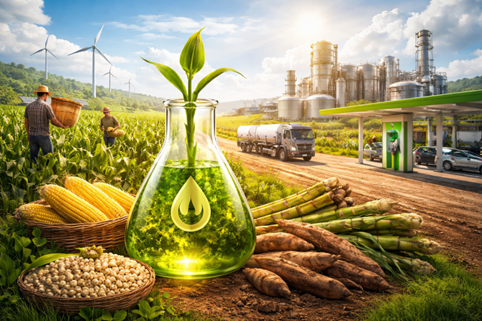
A Dual Solution for Energy Security and Green Growth
Biofuels are increasingly emerging as a “dual solution” to two major national challenges: ensuring energy security and promoting green growth.
If implemented systematically and effectively, biofuels will not only serve as a short-term response to fluctuations in global energy markets but also become a long-term driver of Vietnam’s sustainable economic development. By supporting emissions reduction, enhancing energy independence, creating rural employment, and revitalizing industrial investment, biofuels have the potential to play a pivotal role in the country’s transition toward a greener and more resilient future.
Ngày đăng: 16-04-2026
Tác giả: Trung tâm ứng dụng